Nederlands

From raw data to software that works.

I'm Koen Dercksen, an AI engineer and full-stack developer. Most of my projects start with messy data: emails, reports, articles, web pages. I build the software that turns it into information your team can work with.

Application email

Good afternoon, my name is Mark de Vries, born 14-02-1984, Kerkstraat 12, Utrecht. I have run De Vries Klussen since 2019 and would like to lease a Volkswagen ID. Buzz Cargo of €54,000 over 60 months. Last year our turnover was about €310,000.

  1. Pseudonymise before the model sees it

    My name is ‹PERSON_1›, born ‹DATE_1›, ‹ADDRESS_1›. I have run ‹COMPANY_1› since 2019 …

  2. Extract the facts

    Company age
    7 years
    Vehicle
    Electric van
    Lease amount
    €54,000
    Turnover
    €310,000
  3. Apply the policy rules

    • Company older than 3 years
    • Lease amount below 25% of turnover (17%)
    • Credit registry check still pending

    Ready for the reviewer, with one open check

The data in these examples is made up.

Long-term clients

With some companies I work long-term. I'm part of their team, and I build their AI platforms from the first version all the way to production.

  • Role: Tech lead
  • Since 2026

Trackbase

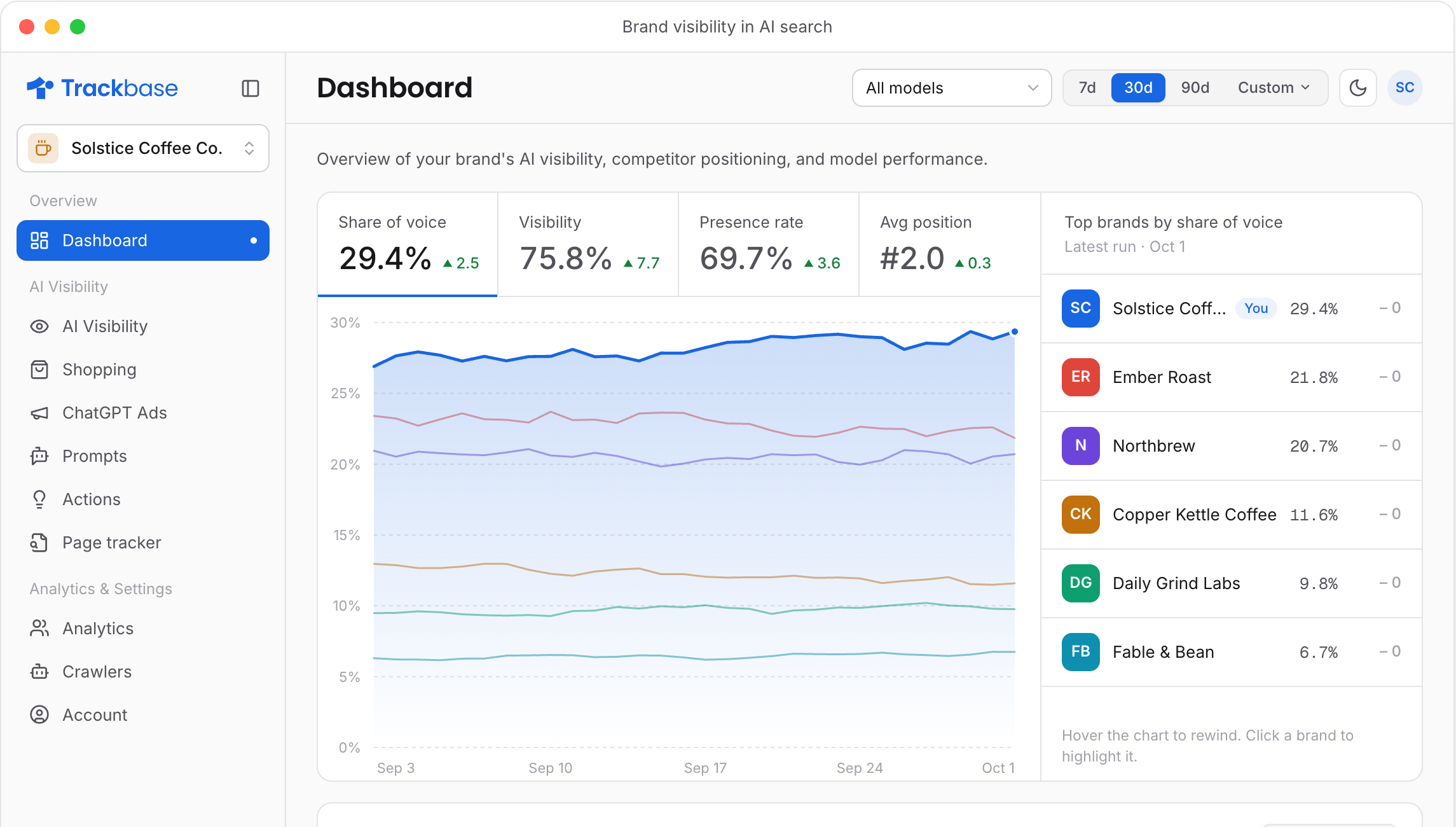
Trackbase shows what AI assistants tell customers about a brand.

Every day, the platform puts customer questions to ChatGPT, Claude, Gemini and other assistants. It shows whether they mention a brand, how the brand ranks against competitors, and which sources the assistants rely on.

  • Scheduled prompt runs across more than 10 AI engines, with analysis of mentions, rankings, competitors and citations.
  • Analytics on AI crawlers and AI referrals, from a tracking script and CDN logs.
  • An insights engine that turns raw model output into scored recommendations.
  • Multi-tenant accounts for agencies, subscription billing and an MCP server with OAuth.
Go to trackbase.ai

The Trackbase dashboard, showing share of voice, visibility and ranking against competitors for a sample coffee brand.
  • Role: CTO
  • Since 2024

World Brain Scholar

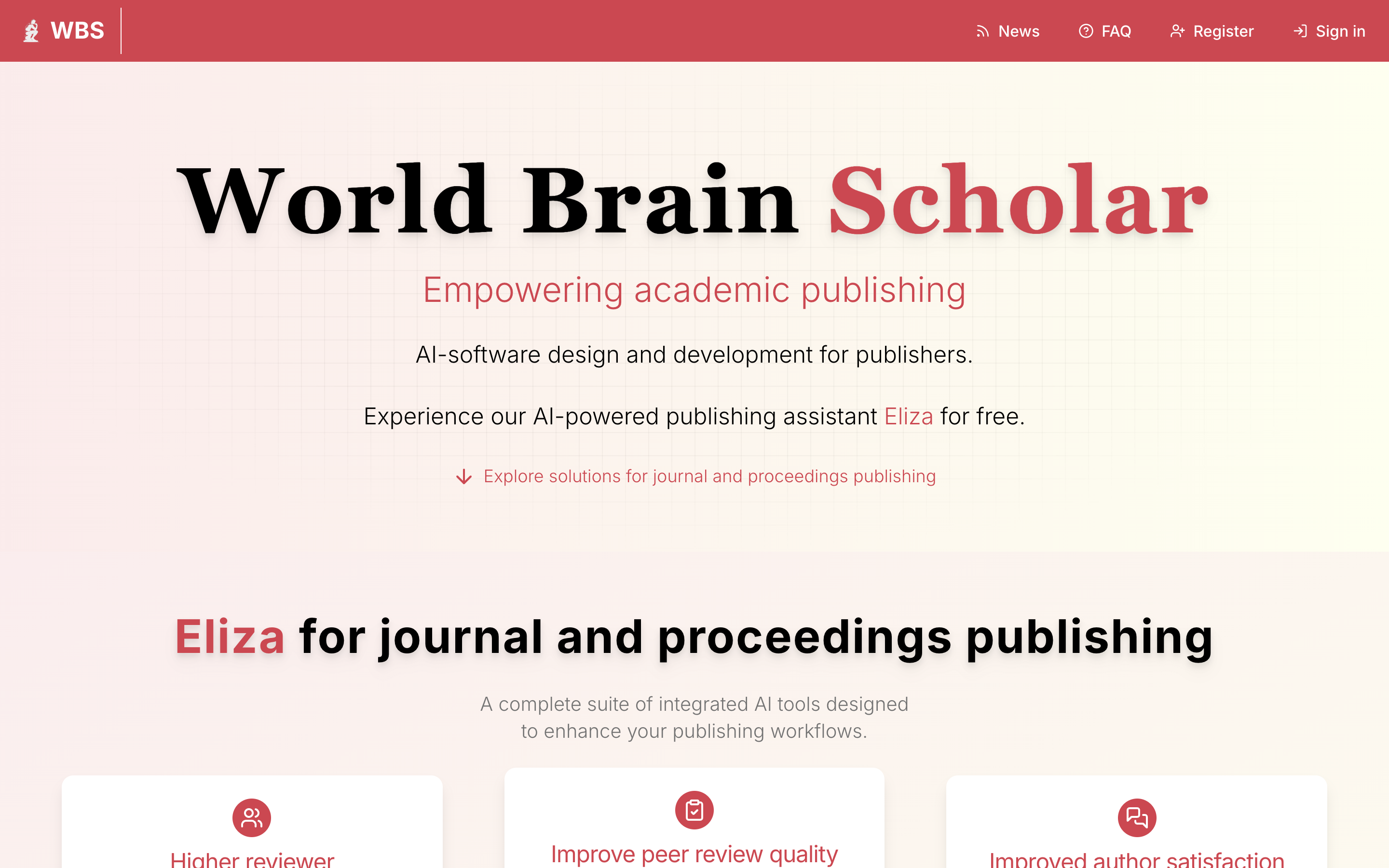
World Brain Scholar builds AI software for academic publishers.

Its main product is Eliza, an AI assistant for peer review. Eliza helps editors and reviewers analyse manuscripts and get through the review process.

  • I designed and built Eliza and took it to production.
  • A pipeline reads every uploaded paper, extracts the metadata, computes embeddings and adds data from OpenAlex.
  • Eliza supports reviewers and editors with an analysis of each manuscript.
  • As CTO, I'm responsible for the technical strategy and product development.
Go to world-brain-scholar.eu

The World Brain Scholar homepage, introducing Eliza, the AI assistant for publishers.

Examples of my work

Most projects start with raw data that costs a team hours every week. Here are some of the systems I've built, described in general terms.

  • Source data
  • AI step
  • Result

Expert articles with sources, in several languages

A blog engine picks a topic, researches it on the web, writes the article with sources, checks it and translates it. It also creates the images and delivers the article to the CMS. An editor approves every article before it goes live.

  • Every article has references readers can check. An article without sources doesn't get through.
  • Validation steps check the structure, style rules and factual claims before delivery.
  • A delivery queue sends each article to the CMS and retries when something goes wrong.
  1. Topic profileWeb sources
  2. Write the article with sources
  3. Check facts and structure
  4. Translate and create images
  5. Article in the CMS, ready for approval

First assessment of applications

Reading and checking every application by hand takes reviewers a lot of time. The system reads the application file, checks it against external registers and prepares a first assessment for the reviewer. The language models never see data that identifies a person.

  • Personal data is replaced with pseudonyms before any model sees it, and every re-identification is logged.
  • The decision comes from a fixed set of rules, kept separate from the language model, so an auditor can inspect them.
  • Reviewers adjust the rules themselves, with a full history of every change.
  1. Application fileExternal registers
  2. Pseudonymise
  3. Extract facts
  4. Apply the rules
  5. First assessment for the reviewer

Lead research and lead scores

Researching companies before a sales call takes hours. The platform collects public data on each company, a language model researches it on the web, and every lead gets a score and a short brief with sources.

  • Connectors to public sources such as business registers and news.
  • A background queue enriches and scores new leads automatically.
  • The team reviews each brief and sends the approved leads to the CRM.
  1. Public registersNews
  2. Enrich
  3. Web research with sources
  4. Score and brief
  5. CRM export

A job queue for shared GPU machines

When a team shares a few GPU machines, agreeing who uses which one gets messy. Now everyone submits a container job to a queue, which starts it on a machine with free resources. A web interface shows the queue, the logs and how busy each GPU is.

  • Jobs are placed by the GPU memory they need, so small jobs can share a GPU and less GPU time goes to waste.
  • Each job runs as the person who submitted it and can only access the folders the rules allow.
  • Coding agents can submit jobs and read the results too, through an MCP server.
  1. Container job from a team memberFree resources on each machine
  2. Select a machine
  3. Run the job as its owner
  4. Logs and GPU use in the web interface

Local language models, only when the team needs them

Language models that run on the team's own GPUs, so no data goes to an outside provider. One API serves all models. A model starts on the first request and stops when nobody uses it, which frees the GPU for other work.

  • One OpenAI-compatible API for all local models, which team members connect their chat and coding tools to.
  • A dashboard shows which models are running, and admins can start or stop any of them.
  • Everything runs on hardware the organisation already owns.
  1. Request from a chat or coding tool
  2. Shared API
  3. Start the model if needed
  4. Answer from the local model

Automatic news monitoring for a client list

Searching the news for each client by hand doesn't scale. A scheduled job collects articles every night, matches them to the client list and classifies them. In the morning, the team sees only what matters, such as an insolvency.

  • Every night, the job pulls in articles from many news sources.
  • It flags important events and filters out routine news.
  • The team reads one short list each morning instead of searching by hand.
  1. News sources, each night
  2. Match to the client list
  3. Classify the event
  4. Morning list of important items

A private AI workspace with specialised agents

A self-hosted chat environment with agents for different tasks, so the team can use AI without sending data to a public chat app. A separate API layer logs usage and caches answers.

  • Agents for different tasks in one chat environment.
  • An API layer between the agents and the model providers that logs usage and caches answers.
  • Everything runs on infrastructure the organisation already has.
  1. Questions and documents from the team
  2. Specialised agents
  3. Layer for logs and cache
  4. Answers inside the organisation's own environment

A personal opening line in each newsletter

A generic opening doesn't get much attention. Now every contact gets a short, personal opening line that refers to something recent, such as a public post by the person or their company, or the last email exchange.

  • The tool pulls the contact list and company data from the CRM.
  • It finds recent public posts by each person and each company.
  • A language model writes one or two sentences per contact, in the sender's tone of voice.
  1. CRM contact listRecent public postsLast email exchange
  2. Find a relevant topic
  3. Write the opening line
  4. Personal opening in each newsletter

Own products

I also build and run a few products of my own.

evoicely

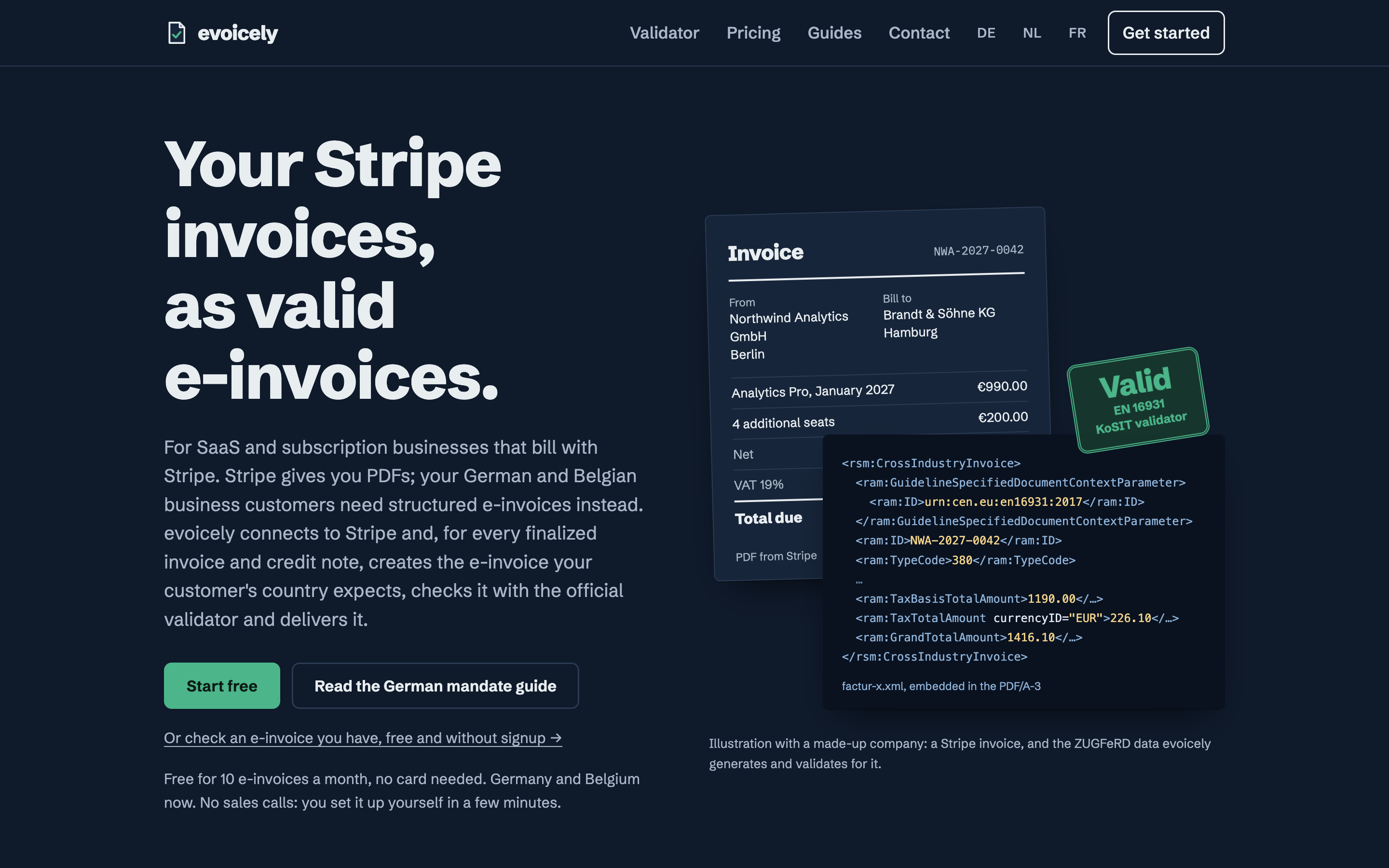
Valid e-invoices from your Stripe invoices.

Business customers in Germany and Belgium have to receive structured e-invoices; a PDF isn't enough. evoicely connects to Stripe, creates the correct e-invoice for every finalised invoice, checks it against the official validator and sends it.

Go to evoicely.com

The evoicely homepage, showing a Stripe invoice and its ZUGFeRD data.

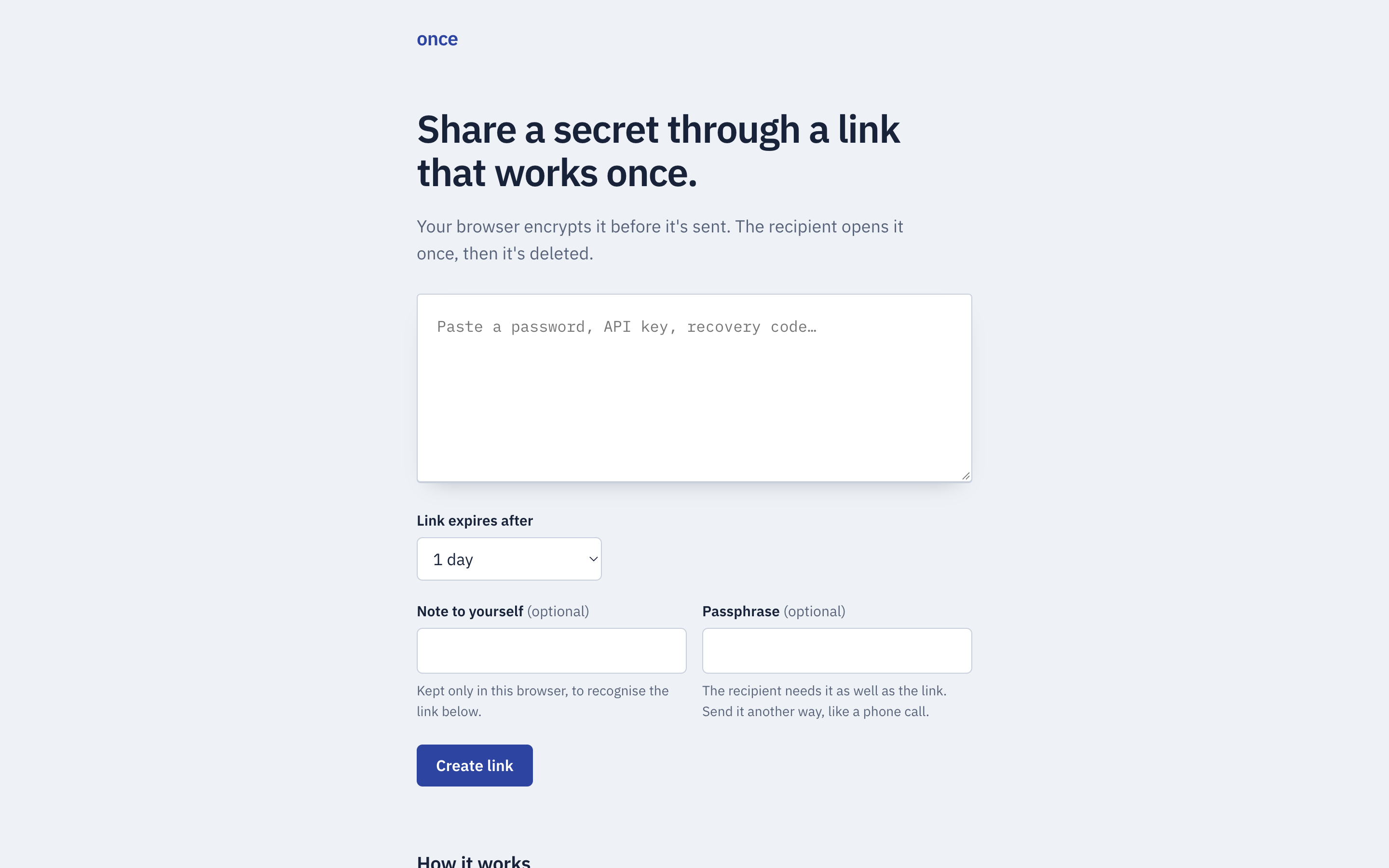
once

Share a secret through a link that works only once.

Paste a password or API key and send the link. Your browser encrypts the secret before it leaves your device, so the server only stores encrypted data. As soon as the recipient opens the link, the secret is deleted. once is free, and you don't need an account.

Go to once.avirai.com

The once page, with a field for the secret and a button that creates the link.

Recent articles

Short articles on AI, data and security, for teams that want to use AI in their daily work. Every article lists its sources.

All articles

Photo of Koen Dercksen

About

Hi, I'm Koen.

For my PhD at Radboud University, I worked on natural language processing for radiology reports, with the aim of making them easier for patients to understand.

Today I'm a senior engineer at Plain Medical, working on medical text. I'm also the CTO of World Brain Scholar.

I keep avirai small on purpose: a few client projects at a time, each one from start to finish. I work out where AI can save your team time, build the system and keep it running in production. And you deal directly with the person writing the code.

Location
Nijmegen, the Netherlands
Languages
English and Dutch
Education
PhD research in NLP, MSc Data Science, BSc AI

Tell me about your project

Describe the problem in a few sentences: what kind of organisation you are, which tasks take too much time and what you've already tried. I'll get back to you by email.

You'll hear back within one working day. The first conversation is free and without obligation, and I'm happy to sign an NDA first.

Or email me directly at info@avirai.com.

I only use this information to reply to you. Read the privacy policy.